
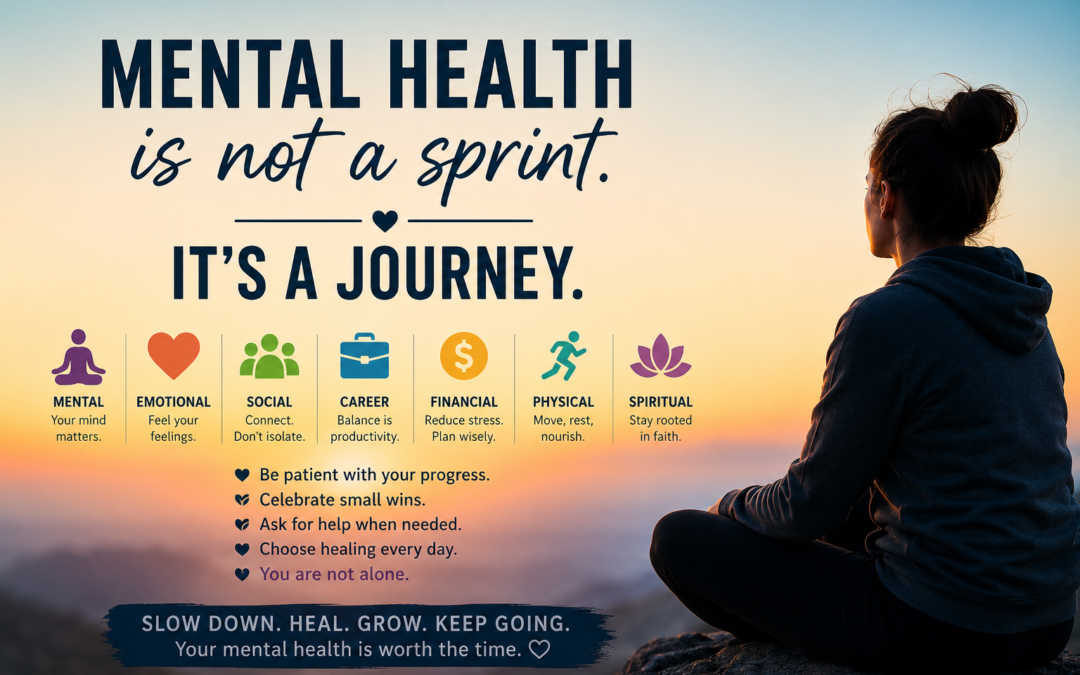
In a world that constantly celebrates speed productivity, and perfection, many people silently struggle with the pressure to “keep going” even when they are emotionally exhausted. The truth is this: mental health is not a sprint. It is a lifelong journey that requires patience, self-awareness, healing, support, and intentional care.
Too often, people believe healing should happen overnight. They expect one prayer, one motivational quote, one therapy session, one promotion, or one good day to suddenly erase years of emotional pain, burnout anxiety, depression, trauma, stress loneliness. or heartbreak. But mental wellness does not work that way. Healing is gradual. Growth is personal. Recovery takes time.
Mental health affects every aspect of life – emotionally, spiritually, socially, physically, financially, and professionally. When your mental well-being suffers, it reflects in your relationships, work performance, decision-making, physical energy, sleep patterns, self-esteem, and even your faith journey.
Religiously, many people feel quilty for struggling mentally. They pray but still feel tired inside. They attend church, mosque, or spiritual qatherinas vet silently battle emotional pain. What manv fail to understand is that faith and mental health can coexist. Seekinq therapy, emotional support, rest, or professional help does not mean you lack faith.
Sometimes, healing is also spiritual wisdom in action.
Socially, poor mental health can make people withdraw from loved ones. Someone may smile publicly while privately feeling empty, anxious, or emotionallv disconnected. The pressure to appear “strong” has caused many people to suffer in silence. We must create safer conversations around emotional wellness, where people can speak honestly without fear of judgment or shame.
Career-wise, mental exhaustion is becomino increasingly common. Many professionals are experiencing burnout, workplace stress anxiety, and emotional fatigue. Society often measures success by money, promotions, or status while ignoring emotional stability. But what is the value of success if vour mind is constantly overwhelmed?
True productivity includes rest, balance, boundaries, and emotional health.
Financial stress is another major factor affecting mental wellness. Debt unemployment, unstable income, family responsibilities, and economic pressure car create anxiety and emotional instability.
Mental health challenges are not always caused by weakness; sometimes they are the result of prolonged stress and survival mode. This is why compassion matters. People are carrying battles you cannot alwavs see.
Physical health is also deeply connected to mental well-being. Stress can affect sleep, appetite, blood pressure, energy levels, and even immune function. Ignoring emotional pain can eventually affect the body.
Rest is not laziness. Therapy is not weakness. Taking care of your mental health is part of taking care of your entire life.
The journey toward mental wellness requires intentional habits. Learn to rest without quilt Set healthy boundaries. Speak kindly to yourself. Seek counseling or therapy if needed.
Build supportive relationships. Stay connected to vour faith and purpose Celebrate small progress instead of waiting for perfection.
Most importantly, stop comparing your healing journey to others. Some people recover quickly, while others need more time. Both are valid. Mental health is not a competition. It is not a race to prove strength, It is about learning how to live, heal, grow, and thrive one day at a time.
Today, choose yourself. Choose healing. Choose conversations that brinq awareness instead of silence. Check on vour loved ones. Encourage someone to seek help. Be kinder to yourself and others. A healthy mind creates healthier families, stronger communities, better workplaces, and a more compassionate society.
Mental health is not a sprint. Slow down when necessary. Rest when needed. Heal intentionally. And remember – your value is not measured by how fast you recover, but by your willingness to keep going even on difficult days.