
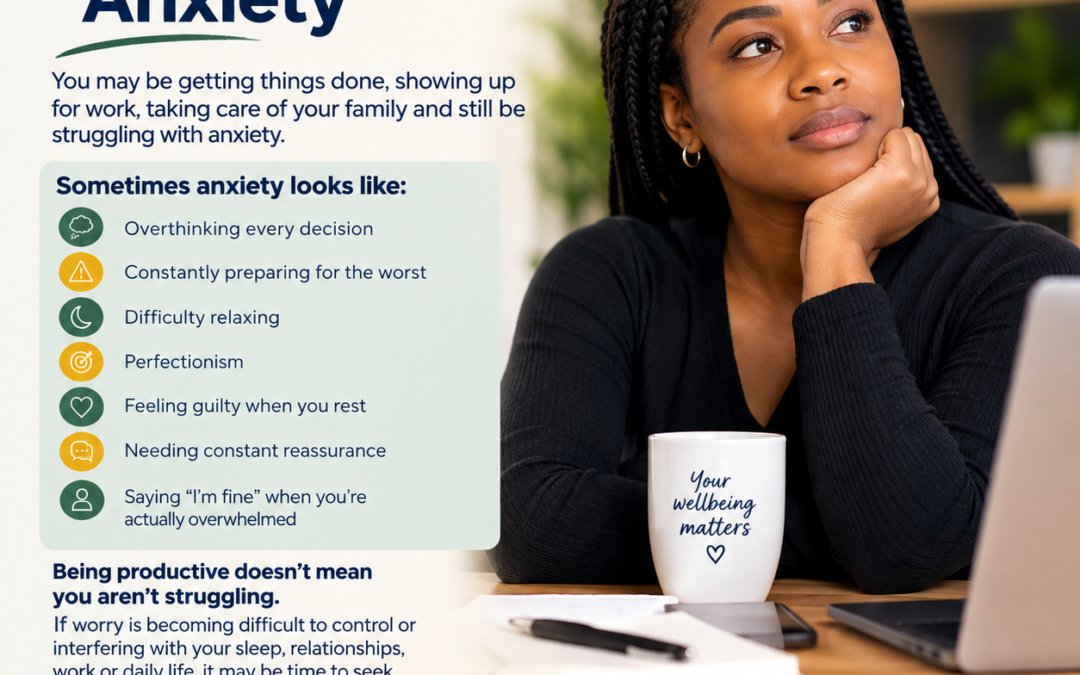
When anxiety doesn’t look like anxiety, it can be difficult to recognise that something is wrong. It can also lead to subtle High-functioning anxiety. You may be working, meeting deadlines, caring for your family, maintaining relationships and appearing perfectly capable to everyone around you, while internally dealing with constant worry, overthinking and emotional exhaustion. This experience is often described as high-functioning anxiety. Although high-functioning anxiety is not a formal clinical diagnosis, the term is commonly used to describe people who experience significant anxiety symptoms while continuing to manage their everyday responsibilities.
What Does High-Functioning Anxiety Look Like?
Anxiety does not always appear as panic attacks or visible distress. Sometimes, it hides behind productivity, perfectionism and the constant need to stay in control.
You may find yourself:
Overthinking simple decisions
Constantly worrying about what could go wrong
Replaying conversations in your mind
Feeling uncomfortable when you are not being productive
Setting extremely high standards for yourself
Struggling to relax, even when everything is going well
Feeling guilty when you take time to rest
Frequently seeking reassurance from others
Preparing excessively for possible problems
Saying “I’m fine” even when you feel overwhelmed
Having difficulty sleeping because your mind will not switch off.
Because you continue to function, people around you may not realise how much you are struggling. You may not even recognise it yourself.
Why Can Anxiety Be Difficult to Recognise?
Many people learn to cope with anxiety by staying busy. Keeping yourself occupied can temporarily distract you from uncomfortable thoughts and feelings. However, constantly staying busy does not necessarily address the underlying anxiety.
Perfectionism can also become a coping strategy. You may believe that if you prepare enough, work hard enough or anticipate every possible problem, you can prevent something from going wrong.
Over time, this can become exhausting.
You may begin experiencing chronic stress, emotional exhaustion, difficulty concentrating, irritability, sleep problems or a persistent feeling that you are never doing enough.
It is also important to remember that anxiety can affect people differently. What feels manageable for one person may feel overwhelming for another. Learning to notice changes in your thoughts, emotions, sleep and daily habits can help you recognise when additional support may be needed. Small steps, such as setting realistic expectations, taking meaningful breaks and talking openly with someone you trust, can also support your emotional wellbeing, especially during stressful periods.
When Should You Seek Professional Support?
Everyone experiences worry from time to time. Anxiety becomes more concerning when excessive worry is difficult to control or begins interfering with your sleep, relationships, work, studies or everyday activities.
You do not need to wait until you reach a breaking point before seeking help.
A mental health professional can help you understand your experiences, identify patterns that may be contributing to anxiety and develop healthier ways of managing stress and difficult thoughts.
Anxiety is not a sign of weakness, and being productive does not mean you are not struggling. Recognising anxiety early can help you understand your needs before stress becomes overwhelming and starts affecting your health and life.
https://health.clevelandclinic.org/what-is-high-functioning-anxiety?utm_source=chatgpt.com
Taking care of your mental health can be just as important as taking care of your physical health. Sometimes, the most important step is simply acknowledging that you are not okay and allowing yourself to receive support.
If you have been constantly saying “I’m fine” while feeling overwhelmed inside, consider taking a moment to check in with yourself.
You deserve support, even when you are still managing to keep everything together.
This article is for general educational purposes and is not a substitute for professional mental health assessment or treatment.
References / Further Reading
Cleveland Clinic. Signs You Have High-Functioning Anxiety.